Authentic America
by Rabbi Levi Stolik, Editor
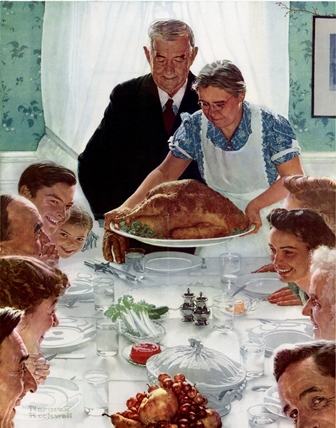
“So, what’s on your shopping list this Black Friday?”
I hear this question in many variations around campus, on the street and on the web. I wonder: Are we forgoing Thanksgiving as a meaningful holiday, instead relishing the deals that succeed it? In the frenzy of today’s mobile society we all race towards perfecting the art of acquisition and are never truly sated. We would do well to turn off our Iprops and reflect—over curried gravy and chili cornbread, Tofurkey or sweet potato latkes—on the freedoms granted us by those who sacrificed to first settle our country. My wife and I, first and second generation Americans respectively, struggle to stay cognizant of our origins (Eastern Europe on the cusp of the Holocaust) and the opportunities awarded us when our parents and grandparents landed in New York harbor. As the original Pilgrims, they were fairly diminished, displaced and dispossessed, yet hopeful of building a life for themselves with their own hands, on their own terms and with the liberty to serve G-d as they saw fit.
The first Chabad Rebbe, Rabbi Schneur Zalman—whose liberation from religious persecution in Czarist Russia in 1798 was celebrated last week—enjoins us to “live with the times,” by adopting life lessons from the Torah. We can find meaning in the concurrence of the Jewish holiday of Chanukah and Thanksgiving with the Biblical story of Joseph, read this week in synagogues around the world.
Sold by his brothers as a young man, enslaved and imprisoned, adrift from his family for twenty-two years, Joseph surmounted all obstacles to become the viceroy of the ancient Egyptian superpower and physical sustainer of the civilized world.
His repentant brothers searched for him relentlessly on their trip to buy grain from the Egyptian storehouses during a widespread famine. Yet, face to face with their long-lost brother, they failed to recognize him, a slave having risen to such high office and a secular leader apparently absorbed in the self-worship that defined his adopted land. Shepherds by trade, in the habit of secluding themselves to meditate in the hills of Canaan, the brothers could not comprehend how Joseph was able to serve G-d surrounded by the decadence of Pharaoh’s court.
But, “I am Joseph,” he declared, the same moral, upstanding Joseph “whom you sold to the Egyptians.” Joseph maintained a deep connection to G-d and a “big picture” consciousness throughout his tribulations and—even more remarkably—in his position of power. Indeed, he emphasized G-d’s Providence to his brothers, “Do not be distressed or reproach yourselves for having sold me into slavery here, since it was ultimately in order for me to be able to provide for you that G-d sent me ahead of you.”
If Joseph were alive today, he would take a perfectly balanced approach to our world of conspicuous consumption. We know he educated his sons to remain faithful to his own father’s tradition of ethics and social responsibility, safeguarding them from Egyptian depravity. Indeed, they received distinction from among all the grandchildren of Jacob who grew up at his side. Today, Joseph, who meshed material “stuff” with spiritual meaning, would guide us in utilizing the ideals (and deals) of this great country to our best advantage. He might warn us to shun trading in these freedoms in exchange for servitude to the ubiquitous “next version.”
Joseph might say: This Thanksgiving think about what you can give, not what you can get.
Rabbi Levi Stolik learns lessons on spirituality, economics, science and current events from the vast Torah tradition of the Mishna, Talmud and beyond as illuminated through the teachings of Chabad. He is a Chassid of the Lubavitcher Rebbe, who studied at elite universities in Europe but was firmly grounded in Torah and was a “Joseph” in our time.
Rabbi Stolik is a religious counselor through the Campus Ministry. He is available at Baruch on Tuesdays, Wednesdays and Thursdays in the Chaplain’s office, rm. 3-218 NVC. You can reach him at rabbicampus@yahoo.com.
land of the free
Ilya Bratman new Executive Director Hillel at Baruch College
As we celebrate Chanukah and Thanksgiving together for the first time in 100 years, we ponder the ideas of appreciation, perseverance and acknowledgment. As a first generation immigrant to the United States, I have first-hand experience with integration while trying to hold on to an underdeveloped Jewish identity. Russian Jewish immigrants can recognize the role of the American Jewish community in bringing them freedom and opportunity in exchange for tyranny and oppression. Thanksgiving is a time to appreciate the incredible gifts and miracles we continue to receive. We can “pay it forward” by participating in our society’s growth.
8 days of thanksgiving
In the holiday season in 1991, the Lubavitcher Rebbe encouraged celebrating each night of Chanukah with a party after the lighting of the menorah, gathering with friends and family to strengthen positive activities and to acknowledge and publicize personal miracles, creatively interpreting the holiday liturgy, “[G-d] Who performed miracles…in those days [and also] at this time.”
_______________________________
oh, Boston!
by Rabbi Levi Stolik, Editor
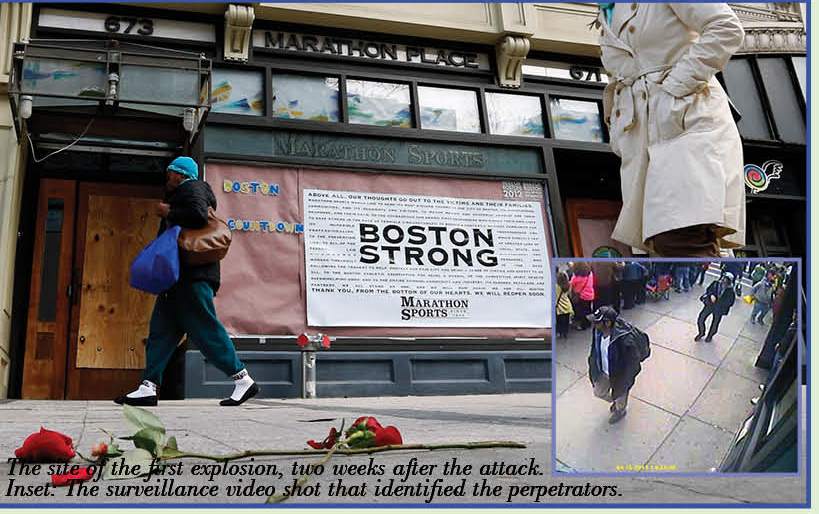
Their names will go down in infamy. Dzhokhar Tsarnaev emigrated to the United States and settled in historic Cambridge with the alleged goal of graduating college and living the American dream. Instead, under the tutelage of his renegade brother, Tamerlan, and the indoctrination into the underworld of radicalism and terrorism, he wreaked havoc on the bedrock of those freedoms on Patriot’s Day at the Boston Marathon finish line, maiming and killing runners and spectators alike.
Two bombings, followed by the murder of an MIT police officer, a car-jacking, a gunfight and a 24-hour manhunt effectively put 30 colleges and their surrounding areas into lockdown.
Law enforcement angencies, the FBI and alert citizens will continue to work to keep terrorism at bay. But Dzhokhar’s college-mates and sports buddies, math professors and career counselors are now all asking themselves—why? As members of the American college community, we too seek answers.
The Previous Lubavitcher Rebbe, Rabbi Yoseph Yitzchak Schneerson, who suffered horribly under Stalin and later under Hitler, stated, “We cannot chase darkness with a broom.”
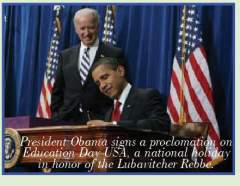
Kabbalah teaches that evil, like darkness, is ephemeral and fleeting, while good is eternal and cumulative. The Rebbe’s first order of the day when reaching freedom on American shores was to establish an educational system to instill optimism and faith in the post-Holocaust generation.
We may never satisfactorily answer the question of how a seemingly typical undergrad could be the perpetrator of such destruction, but we can recognize that each student has enormous potential to effect change. We look towards Boston, cradle of American liberty and capital of our nation’s educational opportunities, for the tools to turn conviction, sacrifice and brains on a noble and ethical course.
the finish line
 In the wake of the attacks, thousands of residents signed up online to offer shelter and food to runners and their families. Goodness and resilience prevail in the city, as funds are being raised to help the victims under a banner formed by a sports announcer just days after the bombing, “We are one. We are strong. We are Boston. We are Boston strong.”
The Lubavitcher Rebbe pointed to positive changes—including nuclear disarmament, globalization and technological advances—as harbingers of the Messianic era when world peace and societal perfection will reign. In a public talk, the Rebbe exhorted his audience to add in good deeds to actualize the Messiah’s arrival. “Do all you can!” called the Rebbe, “…if only ten people would be tenacious enough, he would already be here…”
_______________________________________________________
technology boom
by Rabbi Levi Stolik, Editor

the iron dome explodes
Choosing a topic for this issue’s editorial was no simple matter. In the past months the world, and even our immediate environment, have drastically changed. I would like to focus on technology, hidden amidst the smoke and clouds of recent clashes, both human and natural.
Missiles, as an instrument of war, have long been a peril to society. As technology advanced in the latter half of the 20th century, the range and power of these weapons have soared. Besides allocating considerable manpower and enormous sums in an aggressive missile program, the U.S. invested billions of dollars in a defense initiative. Their initial attempts at combating missiles were statistical failures. Most recently, though, in Israel’s “Pillar of Defense” operation against Hamas, the Iron Dome anti-missile system experienced an incredible 85% success rate. This miracle of science awed even its creators.
Chabad-Chassidic philosophy teaches us that every global phenomenon is relevant on an individual level, as well. While most of us are careful to secure our hi-tech devices from theft and piracy, we may not realize that with the development of technology, our psyche is in need of protection as well. We plan our days proactively, by following our life’s purpose and long term goals and taking our passions and principles into account. Then we are bombarded by ads, apps, sites and IM tools. These insidious intrusions come without the telltale warning screech of enemy fire. Some “bleeps” simply serve as distractions, hindering us in leading a productive and meaningful life, others cause real emotional damage.
Yet all this groundbreaking technology can also serve as an “Iron Dome.” Utilize electronic devices as study aids and a support system to reach out to friends and mentors. Install ad-block features, schedule downtime, or use other internet filtering modes. Listen to inspirational MP3s and videos – also available through Baruch’s DML. These are all ways to combat negative influences, boost our creativity and bring goodness into our lives and environment.
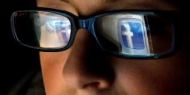 [According to the Talmud and Kabbalah, the ultimate purpose of every individual and phenomenon is to serve G-d in order to create a better world. We can therefore infer that the advent of technology is not primarily for the production of bombs or anti-missiles, or even for entertainment, but rather for the goal of bringing goodness and kindness into this world. The overwhelming volunteerism generated in Sandy’s aftermath is an illustration of this reality. The miracle of instant communication – email, internet forums and facebook –greatly enabled the organization and speed with which thousands came together to aid people in need.]
I invite you to share your own techniques in creating and maintaining a personal “Iron Dome” with our readers.
PEACE!
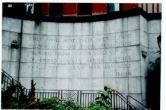
Etched in a stone wall opposite the United Nations headquarters in New York City
Expending national resources on tools of war will always be controversial, yet we all benefit from the advances afforded by their development. GPS technology today has numerous ways to streamline our lives and will long outlive our need for guided missiles. I can trackmykid and receive minute-by-minute updates of my daughter’s school bus progress in traffic – I don’t have to wait out in the cold and I free fifteen minutes in my day. This idea is reflected in Isaiah’s famous prophesy of over two thousand years ago regarding world peace. Etched in a stone wall opposite the United Nations headquarters in New York City, it reads: “And they will beat their swords into plowshares…”
________________________________________________________
vote for good
by Rabbi Levi Stolik, Editor

Baruch USG front-runners’ debate. Photo credit: ambroseny.com
Were you glued to all the top news sites as the GOP Presidential primaries shaped up around the country? Maybe you are apathetic, having lost any hope for change. Perhaps a friend of yours recently ran in the USG elections, and you are excited about the prospects for a better Baruch. Or you are among those students waiting for the elevator in the second floor lobby who discreetly tossed the election ticker into the scrap slot after it was shoved at you by a senate-hopeful. You are either a student-club-board-member-incumbent or not a member of a club altogether, or somewhere in between.
But if you vote, you count.
If you’re an undergrad at Baruch you are too young, in all likelihood, to have instated our previous US President, George W. Bush into office in 2000 by a margin of less than three hundred votes, and only if you hail from Florida, anyway. But you might have cast one of your first ballots in 2008, and were among the voters aged 18-29, who swept the social media outlets with support for President Barack Obama, purportedly helping expand his winning margin by a whopping thirty four points.
President Obama will visit college campuses throughout the Midwest “swing-states,” trying to recapture the interest of the optimistic youth who voted him in four years ago. In a presidential race that promises to be closer than 2008, he can’t afford to have disillusioned young people skip the polling booths. As every politician out there, he knows that your vote counts.
Whether you are actually under age thirty, or even if you are among those of us at Baruch who remain “young at heart” , you surely don’t remember when the idea of the great potential inherent in each individual action was introduced.
It was Maimonides, an 11th century Jewish philosopher, who said: “a person should always view himself and the world as equally balanced between merit and sin. …if he performs one mitzvah (good deed), he tips his balance and that of the entire world to the side of merit and brings deliverance and salvation to himself and others. This is implied by the verse in Proverbs that ‘A righteous person is the foundation of the world,’ i.e., the one who acted righteously, tipped the balance of the entire world to merit and saved it.”
It is a common tendency to underestimate the power of human action. But as Maimonides explains, you have the power to affect change. Get caught up a bit in the current climate of voting fever and reevaluate. Recognize how even one small deed can make all the difference and change the world for good.
__________________________________________________
iProtest
by Rabbi Levi Stolik, Editor

We tend to take things for granted. It is human nature to accept the status quo. It takes consciousness and perception to appreciate the freedoms we enjoy and maximize their potential.
As surprising as it seems, the idea of holding demonstrations – and be effective – with minimal bloodshed or serious injury is a pretty recent phenomenon globally. Today they are happening everywhere, right here at Baruch College and, famously, further downtown on Wall Street. It is a fine line to tread, for unfortunately the opportunities for freedom are abused, as is apparent in certain countries where revolution was recently staged.
Our social development as humankind is only overshadowed the by technological advances that are snowballing the world over. As with freedom of speech, we can appreciate this amazing gift and utilize it to enhance society: to text a friend a happy birthday wish and make his day; to make a donation via paypal and other small and big acts of kindness. This takes a state of awareness, for we can just as easily slip into negative behaviors, such as using the internet to commit fraud, spread viruses or just simply waste time.
The trend towards civilization and democracy, technology and globalization, most statisticians agree, is a progress towards a better world (see sidebar on back page). And it’s in your hands (or pocket), whether via an iPhone, Android or Blackberry. And they sing, too, for the world is becoming a happier place.
____________________________________________________________
radiating goodness
by Rabbi Levi Stolik

Aerial views of the Fukushima Daiichi nuclear plant in Japan, before and after the disaster
The Baruch College Community is blessed with many initiatives that have positive impact and light up the world around us.
We have witnessed this with the recent flood of fundraisers including “Help Japan”, Pakistani Relief and Relay for Life; we’ve participated in initiatives to help fight Breast and Prostate Cancer and support the March of Dimes, along with various clothing, toy and food drives. We’ve also seen St. Baldricks and tree planting, community action for state financial aid for low-income students and Dr. Sitt’s “Psychology in Motion.”
So what does the Baruch Light have to add in the realm of “proaction“? Will its purpose be fulfilled merely as quality recreational literature?
The physical devastation wrought by the earthquake inJapanwas horrendous. However, the greatest fear striking the Japanese people at the moment involves the damage sustained by its nuclear reactor, because the extent of its potential harm is not just a one time attack. The reactor’s toxins permeate the earth and air, and will continue to infect the environment for the foreseeable future. Moreover, someone traveling from the affected area spreads the radiation to distant locations. All this occurs in a way that is not readily observed.
“You must learn from anything you see or hear and thereby improve yourself and your surroundings for the good,” says the Baal Shem Tov, founder of the Chassidic Movement (1698 -1760,Ukraine). Especially with regard to a world event of such magnitude! Although the current situation inJapanis indeed dire, there is a positive application of equal measure hidden in every aspect of the fallout. It is up to each one of us to realize this potential in our environment and our personal lives.
It is the goal of this publication to serve as Baruch’s positive reactor. With your active support, we hope to infuse Baruch with a force of goodness and facilitate kindness within our community. Our approach will reflect the lessons we learned from the disaster: deep-seated, extensive and enduring.
We hope to foster that positive energy in every aspect of this great institution of learning: professors, staff members and students alike through dialogue, collaboration and initiative. We invite you to find your particular niche in this great venture. Log onto our website, http://www.baruchlight.com and share your comments. We welcome your suggestions for columns and topics of discussion. Spread the word about Baruch’s new nuclear capabilities, and with your efforts and G-d’s help, we will succeed!
Rabbi Levi Stolik is in his 11th year at Baruch College, working as a religious counselor through the Campus Ministry. As an adherent of Chabad (the Chassidic movement originated by Shneur Zalman of Liadi, 1745 – 1812, in the Ukraine and later in the town of Lubavitch, Russia), his views on spirituality, economics, current events and the world’s existence are culled from the vast teachings authored by the current Lubavitcher Rebbe and his predecessors. As an emissary of the Rebbe, Rabbi Levi believes in our ability to reveal the goodness inherent in each other and the world. He dedicates his work to the ultimate success of this purpose, when “the earth will be filled with the knowledge of G-d as the waters covers the sea” and peace and prosperity will reign eternally for all humankind.
Rabbi Levi is available at Baruch on Tuesdays, Wednesdays and Thursdays in the Chaplain’s office, room 3-218. At any other time, you can reach him at rabbicampus@yahoo.com.
 The Baruch Light
RE: Technology Boom
One of the primary issues I confront is the sheer amount of information that is available on the internet, in classrooms, in the halls of Baruch and in New York City at large. It is exceedingly easy to get lost and not even know that you are lost. I am likely to expend a lot of energy and time unnecessarily.
One of the ways to build an “Iron Dome” to protect myself against bombardment is through my friends. By maintaining mutually beneficial relationships, I develop longer standing ‘story lines’ in my life and I am increasingly able to withstand the pressures put on me by society. It is the warmth of these friendships that I take home each night.
—Barry Polinsky 2014
MPA Policy Analysis